It can be really hard to see ourselves accurately sometimes. It’s a weird thing about being human that we dont have the ability to ever really see ourselves as others do. This is something that despite heaps of self awareness, we can’t exactly leave our bodies to watch ourselves go about our day the same way we can naturally be witnesses to other people.
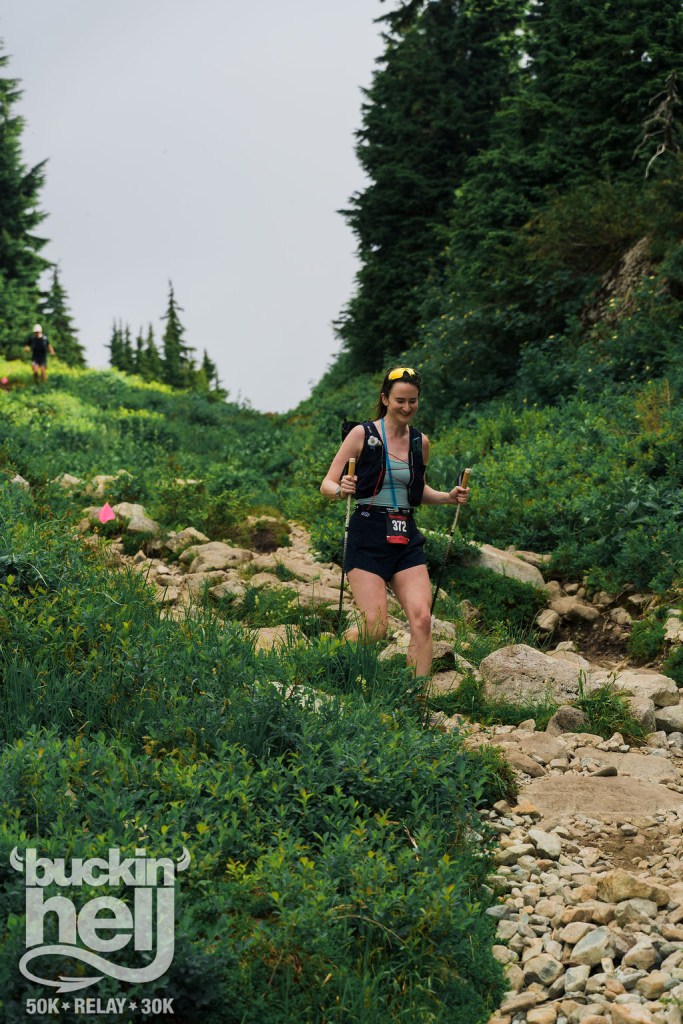
I was running an 18km trail race in Squamish in July, and while I was running I was thinking to myself “wow they’re a really strong runner” about a person in front of me on the trail. Then I realized, Amanda, you’re keeping up with them, you are just as strong. I ended up passing them part way through the race, and recognized that this was a moment it was hard to see myself accurately. We often don’t give ourselves enough props for how far we’ve come, because the goal posts are often changing.
Once we reach those, we have our sights on the next thing. We get used to the smell of the roses in the garden we live in now, likely something we once yearned for. Not noticing their beauty or how long they took to grow to that size, we forget and acclimatize. While we are quite an adaptive species, more than ever is presence becoming an endangered resource.
I used to see trail runners with their hardcore vests run by me while on a hike, and I remember thinking ‘wow I can’t believe they are running this’. Now that I am that person doing that thing I used to be in awe of, the goal posts have changed. Now it’s ultramarathoners that are incredible and I’m only running 18km. Maybe even you reading this think, 18km sounds bananas! And I also thought that until recently.
Like anything, it’s all perspective. If you’ve been here for a while, you know I’m not about to tell you to make everything sunny and look on the bright side because, well that’s trash. For some things there is no bright side, it’s just shit. And that’s real.
There is value to recognizing how far we’ve come. How much a friendship has meant to you and changed your life, even if that person isn’t in your life anymore. How you maybe used to strive in school to be where you are now, or you’ve created the family you’ve always wanted. Maybe you’ve maintained a life you enjoy, and that’s worth celebrating too. Maybe you’re not even sure where you’re headed, or what you want – great! It’s all welcome, there’s space for it all.
What stands out to me is that we make space to reflect and honour what has been deeply special, what has impacted us, who has changed us, what we’ve achieved, and even where we are at a given moment. Not all these things are guaranteed to be positive, and we need to allow that. Many hard things that we dont ask for are often the catalysts for change. As a neurodivergent person I am sensitive to the awareness of time passing and have my finger directly on the pulse of being alive, which is a beautiful and painful depth to live in that many of my clients do, too.
In this busy, overstimulating, ever-increasingly technological world we live in I ask that you occasionally pause to be. I know, It’s a practice for me, too. It can feel like time travelling to get off tech, and likely if you think to moments you felt most connected, joyous, inspired or in flow you likely weren’t scrolling your phone or binge watching that tv show for the 100th time (I get it, I love the office too).
So I invite you to spend some tech free time with yourself, even just 10 minutes but I hope more. To pause. Reflect. Be with you. Check in with what you need. Send your people love. Send yourself some love. Feel the wind on your skin, watch the clouds move in the sky, And just be.
To listen to this article, check out my Podcast Here
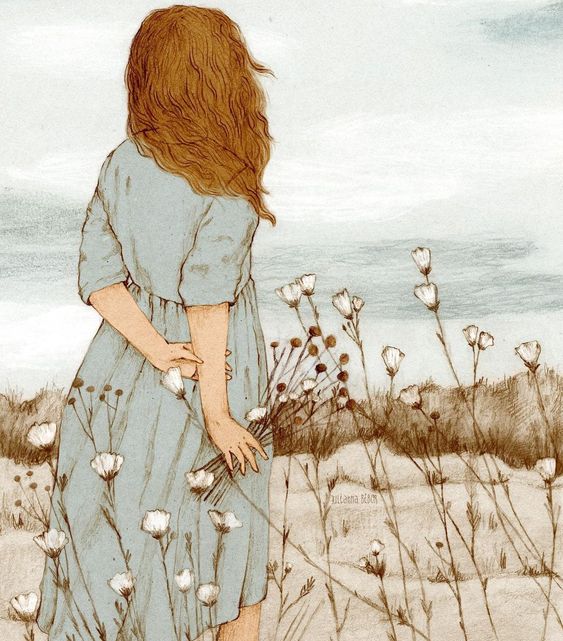
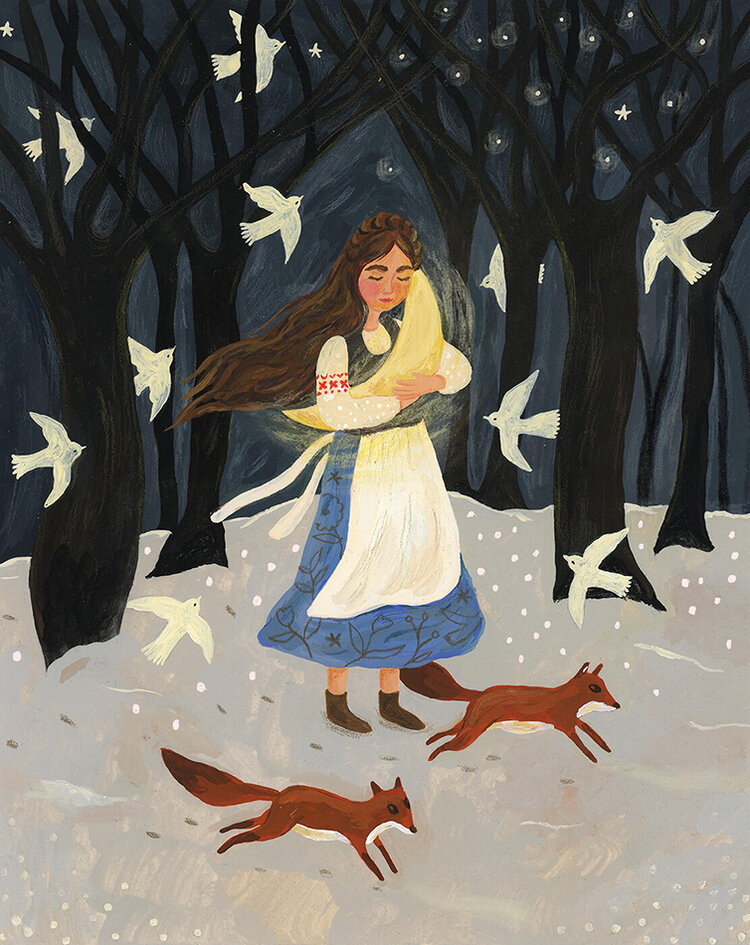
Illustration by Julianna Bibor
What is emotional neglect
To feel understood leaves us feeling less alone, and more a part of something known. A feeling that what we are going through or experiencing is something real, and that our feelings matter. This is often something missing from the adults in our lives growing up when we experience emotional neglect.
Emotional neglect is what didn’t happen, what wasn’t provided emotionally growing up. You may have had your material and physical needs completely met, known that you are loved, and still felt this sense of deprivation. It could feel like a hole inside, a persistent emptiness. What it really is, is a yearning for relatedness, to feel like someone gets you.
Examples of emotional neglect could be ignoring your bids for connection, feeling rejected for having big feelings, having to deal with feelings alone, caring for a parent emotionally- also called parentification, feeling unheard and dismissed, not advocating for struggles that parents witness in their children, withholding affection, and not being listened to attentively. Essentially not authentically relating with you. I also want to stress that many of these things can’t possibly happen all the time. We cannot meet children’s needs every time, its incredibly hard to be a parent. What I’m referencing here, is chronic unmet needs which make up emotional neglect.
When we haven’t had that attunement, curiosity, and understanding about our feelings and perspectives from caretakers or important figures in our lives growing up, we adjust our sails to not feeling seen, we get used to it. We learn the routes on the map that lead to getting attachment needs met for survival and learn to take what connection we can get.
To highlight the impact of this, to feel chronically invisible is akin to feeling like we don’t exist. I can’t tell you how many times I have heard people justify their upbringing by saying well I wasn’t physically abused, no one ever hit me. And yet psychological wounding is enduring. There may be a beginning and an end to physical abuse in the moment, and psychological continues on. I am not looking to minimize physical abuse, which can be very traumatic and scarring. And also highlighting that we need not dismiss the longstanding impact of emotional neglect.
It’s deeply rejecting, especially when we’re children. Attention, when brought in a soft, tender, caring, holding way, is love. Feeling noticed is love. And being deprived of those things most of the time, is damaging.
This isn’t looking to point fingers at your parents, we can have compassion for them, that they likely also experienced ruptures in connection, feeling ignored and invisible, maybe aren’t aware of their impact on you, AND honoring your story and your experiences means talking about what really happened, which for some can feel like a betrayal. And my dear, if you have experienced emotional neglect, you have been betrayed many times already, in small and big, every day moments.
When we feel chronically unseen, we learn to develop a relational self that is different than who we really are when we’re alone. This is adaptive, as others couldn’t understand or couldn’t meet you emotionally, and or psychologically with your way of viewing the world. Most people have social masks, which makes sense. When we don’t know someone else well, or we aren’t comfortable, we’re not going to put all our vulnerabilities out on the table. And for those with childhood trauma, which is most of us, we had to trade our authenticity for attachment. Which means that we couldn’t focus on developing who we are fully because we were too busy trying to navigate maintaining our attachment to our caretakers.
We may maintain our attachment to them through parent pleasing, which becomes people pleasing, or staying loyal to them by not talking about or looking at our own experience and feelings. Both of these strategies are for good reason. We need other people. Especially when we are kids whose needs completely depend upon adults, but we also deeply need others as adults too. That even if the connection is subpar or empty, many people fear losing it because it may be all they have and it feels better than nothing. This is a reason many people stay in relationships they aren’t happy in. Fear of being alone. Because it really is that threatening for us, to feel psychologically and physically alone.
Relationships
And for those that are used to hiding themselves, and focusing more on others, its a clever way that HSPs or childhood trauma survivors have learned to adapt to the emotionally immature and unavailable ways of those they depended on.
In adult life, these skills can become a hindrance to building mutual relationships, and maintain the wound of not feeling seen. Mutual relationships being not one sided, where one partner in a relationship does majority of the emotional, mental labour. You may even feel safer not feeling seen or being vulnerable being in more of a caretaker role in your relationship. Now theres nothing wrong with this at all, if its what you want and what feels good to you. And, for folks that have experienced emotional neglect, it will feel familiar, and likely won’t feel fulfilling as it can be a reenactment of what didn’t happen, and of how you weren’t seen or valued.
We may seek out partners that are not able to nourish us emotionally, and if they do it might feel engulfing or weird to have someone really see and reciprocate our emotional care. When we aren’t seen, and don’t feel safe when we have been vulnerable with others, it reinforces that idea that there isn’t anyone out there that “gets” us. This is incredibly lonely. It can even feel like you don’t really exist, or you’re missing something that other people seem to have.
Another aspect of being a highly sensitive person who has experienced emotional neglect is the ability to hide amongst others. It’s something HSPs are used to doing since our brains work a little differently than your average Joe. Since we can be more attuned to the subtleties of whats going on around us and inside us, we may have learned that its risky to ask others about things you notice in them, or share about our existential thoughts or worries, or whats really on our minds or how we are really doing because where do we even start.
So you may have learned to tone down what you share with others, all the things you notice, because you’ve found that with your parents or early relationships, others didn’t understand or were able to engage with what you brought up.
There is a paradox, that HSPs so deeply crave deep meaningful connection, and also feel loneliness so deeply. When HSPs haven’t felt consistently seen growing up, they may learn to create a relational structure internally that says to them other people aren’t capable or interested in knowing them.
There can be great pain and loneliness in this gap, of feeling like you can reach other people deeply but they can’t reach you. Maybe they lack the skills, or you’ve built relationships where the foundation is you being the one doing the emotional labour, and them the recipient of your curiosity and depth about them. Something that is likely familiar.
Psychological loneliness is the experience that others aren’t having the same experience as you about the same event. That what you are witnessing, others you’re surrounded by may not be. Now of course there will be different perspectives and lenses through which we all see things, and the difference is the perception that others won’t be able to see yours at all.
Loneliness with other people is something HSP’s are familiar with. In my experience it is often HSPs that feel psychologically lonely with others more often because we have such a deep capacity to relate, that can’t be found at your average party or get together in large groups. We can struggle with expressing it, unless we sense the other person is like us, or feels safe.
One of my favorite podcasts, We can do hard things, Glennon Doyle says “When I am alone is the time that I feel like I exist the most”. Like she is the color blue, and can feel her blueness, but that when she is with other people her colors mix with theirs and she starts to feel green, and how she enjoys that with a group of people having the same experience with others like at a concert, or watching a sports game with loved ones – both experiences where you can dissolve together. But that she is the most lonely when with a group of people and she can’t connect with and see others blueness or connect with her own blueness she feels like she is disappearing. She says when you feel like there is supposed to be connection and there isn’t any, that’s really lonely, and that can feel like you really disappear or don’t exist.
Robin Williams said that he used to think that the worst thing in life was to end up all alone, It’s not. The worst thing in life is ending up with people who make you feel all alone.
Feeling invisible is familiar for those who have experienced emotional neglect. Almost as though they don’t exist to others in ways that feel really big for them inside.
When Glennon talks about how when we feel that there is supposed to be connection with others and there isn’t, this is especially hard for HSPs who have experienced emotional neglect for a few reasons. We may witness that others seem to be okay with lacking emotional depth and vulnerable authenticity to conversations, which are the most stimulating kinds for HSPs. This can feel depriving, and empty, which may bring up grief for the lack of stimulating, engaging and alive relatedness that wasn’t there growing up or for much of their lives. On a deeper level, a reminder of not feeling known, or cared for.
It is inherently lonelier to be having a deeper experience of life than most people are having.
You are having a different experience, and that is both beautiful to be affected by life so deeply and very hard, and at times isolating. It is even harder to have experienced a deprivation wound of lacking emotional connection and attunement as a child, and to have that wound in adulthood which can intensify the lonely feelings.
There isn’t a simple, or one size fits all answer to the loneliness. It could be inner child work and learning how to be with our young selves when they feel so alone and unseen,
checking in with yourself around safe people- do you hold back, or withdraw, take the listening role, changing up our routines to take more risks, joining a class or something that feels good for you regardless of if you meet others or not, or simply tending to yourself. Can we assess who or what makes us feel less alone? And a reminder – You are not something to fix.
I don’t have a clever one liner to wrap up the real experience of this. The more that we know ourselves, and learn to respect and care for ourselves in the ways we weren’t when we were little, I believe, our loneliness may lose its intensity, but not its longing.
The challenge of being seen is that in order to be seen, we need to show our true, messy selves. The self that we aren’t sure others would find acceptable, the one we tell ourselves others might reject or dismiss would need to be shown.
Showing up in an authentic, imperfect way is a practice for me. I can be so edited it is like my face becomes one with the mask at times – the mask of perfectionism, of not risking saying the “wrong” thing. It takes repeated effort to chip away at the mask, take risks in small ways with emotionally safe people to trust that its safe out there to be myself.
Culturally, there are many messages out there with grand sweeping expectations – “just be yourself!”, “be authentic!”, “don’t worry what anyone else thinks!” – but these things are actually much more nuanced than just simply deciding to be yourself. It’s not like you can wake up one day and say oh, okay I hadn’t thought of that. Contrary to these popular phrases, sustainable growth happens in small, teeny tiny moments rather than just deciding one day to be another way.
Perfectionism is a survival skill. We learned somewhere along the way that we need to be a certain way to be loved. That feeling shame was really bad and must mean that we are a bad person, or maybe someone would leave or reject us if they knew the real us. These childhood experiences and interpretations from our innocent little minds get carried into adulthood, and at some point this skill starts to hurt us more than it helps us. It can leave us lonely, lacking true connection, or forcing our way through life’s tasks.
Here are some questions for reflection..
How do you know when you’re editing yourself in front of someone? aka. how are you doing? good. How do you practice hiding? with others? with yourself? How can you practice surrendering in small every day ways to what is? How might life or relationships change for you if you started showing more of yourself?
Therapy is a wonderful way of practicing taking the mask off – being able to sit there with someone else who can gently help you to lift up the rocks and take a look underneath. Group therapy is another way to practice and challenge your relational patterns of how you show up in relationships. Both require safety and trust in your practitioner and fellow group members, which is established over time – as is becoming more of yourself.
Grief is often associated with losing a loved one, and yet grief shows up in our lives often when no one has died. It shows us what is important, how much we have loved, and how much we have yearned to be seen, known, heard, supported, cared for, or noticed by those that are important to us, and the depth of the chasm of how that wasn’t met.
It can be outgrowing situations that can no longer contain us. Outgrowing patterns that don’t serve us anymore but that have helped us survive. There is a pain in leaving that comfort and familiarity, as that way of moving through the world means embracing uncertainty to move forward.
In the context of childhood trauma, its grieving what we didn’t get from our parent(s) that we needed. It’s when we can allow ourselves to touch the pool of pain under the surface that we thought was just a part of being alive. This is a death in itself. It is death of hope for finally getting what you need from someone who isn’t capable of giving it to you. It is the death of putting yourself and your needs second for hoping that if you can behave a certain way and do enough for them, that maybe they will one day turn around and be what you need.
It is a reminder that we are alive, to experience internal births and deaths of different parts of self. It is exactly here, in the place we often avoid because its too painful, that is directly where we can find our growth.
We need people in our lives that will be honest with us about what they notice, where there is a safety cultivated to express our true selves. Only here can healing happen, as the injury has happened in relationship, healing can only happen in relationship.
That kind of being with – whether it be a therapist or a good friend, is essential for our wellbeing. We cannot heal alone and then come back to relationship. The healing must happen in the safe container of a relationship. Only there will we be able to practice messing up, expressing ourselves honestly, and building authenticity.
I was 20 the first time I remember meeting someone who was unequivocally and unapologetically themselves. There was something about their presence that was so vibrant, and so unedited that was deeply refreshing. He was my professor in Social Psychology in second year Uni.
I remember thinking, I want to be like that -someone that is just so comfortable in themselves even when it makes others uncomfortable. Since those deeply impactful classes, I have made becoming more myself to be a guiding principle in my life.
There is a reason that there are so many pop psychology quotes out there about unlearning who you thought you had to be to become who you are. And that unlearning is life work.
Sometimes I think back to little me who barely spoke in school until Grade 4 and was so shy that anytime anyone would allude to her or call on her, she would blush. I think back on her sensitivity fondly.
Grade 4 was when I found out I was good at running. When I say found out, I mean I had no idea until we had to race all the other kids in our grade in heats on the field. I surprised myself when I noticed that I couldn’t see anyone beside me about two thirds through the 100m sprints. I gained a lot of confidence there and felt seen by others, respected and known for something.
To become more myself is to honor my younger self and what she knew to be true that she couldn’t explain or didn’t understand. Its in noticing how she speaks to me these days in subtle ways that feel oh so familiar.
As I untangle her beliefs these days its like solving a mystery where clues continue popping up just when I think I’ve solved it only to be humbled by her clever self again. Or dancing the same way your whole life and noticing that maybe you can add in a few steps, or change the sequence to that same familiar dance. Its about recognizing that you are both the investigator and the choreographer. That someone else gave you these steps and this mystery and you are the one who can choose what to do with it now, whether you want to notice the dance, and whether you want to follow the breadcrumbs.
Becoming more myself means allowing myself to be unencumbered, layer by layer, of self criticism and shame. As I lighten the load on my psyche and soma, I make space for my true self to feel relaxed and comfortable as she shines her beautiful light through. This is my life work.
When I started reading about psychology, I was ravenous to “figure everything out”. I could not get enough of learning about our patterns, how to deal with emotions, and to find out how normal I was. I read voraciously for years, believing that if only I had a sense of mastery over my struggles and how to communicate with others effectively, that I would resolve my sense of internal shame.
I will let you in on something. A small percentage of the things I have learned and read about have helped – self compassion, understanding myself better, normalizing my experiences, and gaining perspective.
But the thing that has helped the most? Allowing myself to have my experience and be witnessed by another. I believe that is the healing, and it is also long term work. For myself as someone with relational childhood trauma, the healing has been and continues to be in safe, warm, and receptive relationships.
The thing that hasn’t helped? Rushing to figure out what the next thing might be and actually avoid what I’m feeling through seemingly very productive means. When I devoured self help works the message I was sending to myself was that I’m not okay as I am.
I can completely understand the desire to have someone else give you the answers. I had hoped that too for a long while, that maybe this one book, or that podcast, or this one therapist and it will all change. Therapists are not God. We cannot fix or change you. Even if we were fully healed humans, whatever that means, we still couldn’t give you the answers because that is your work. Believe me, its not because we don’t want to. If we could we absolutely would love to relieve the suffering of our clients.
What we can do is sit with you in your pain. Remind you of your goodness. Allow you to have your humanness. Talk with you about how our minds work and how they are always talking to us and sometimes sharing things we don’t want to hear. Help you practice presence. Bring your awareness to your own patterns. Guide you to take better care of yourself and your mind.
So I remind you lovingly as I once needed to know too, that in my eyes, there is no quick fix and there needs to be a willingness to explore to move forward. To befriend yourself. To unlearn some mean things you’ve been carrying about yourself. To strengthen your voice. To feel your emotions. To stop missing your life.
This website and blog posts are not a substitution for personal therapy or therapeutic intervention.
I have been meaning to write a blog post for months now. I have opened up my blog multiple times, waiting for inspiration to strike me while sitting in front of the computer staring at a blank screen. This is the first arrow. An event has happened. My mind feels blank upon initial inspection, though if I tune in carefully I can hear a dialogue when I compassionately ask myself: “what is keeping me from writing?”
I notice the thought stream: No one wants to hear what you have to share, its all over the internet anyway, you’re preaching at people, they won’t care to read it (it goes on in a similar drone)
This is the second arrow. My dialogue around what others may think, the story I have for myself around writing, that is what causes the suffering – not the event itself. Not writing doesn’t inherently cause suffering, its my thoughts and story about not writing posts that evokes pain.
Now this is not a way we avoid suffering entirely, to be human is to suffer. We can’t control the events that happen to us and they often won’t be what we choose. However what we can control is whether we add fuel to the fire or not. Notice how when you’re having a tough time and you drink some sort of toxic thought cocktail like: get it together, you’re overreacting, you’re crazy, etc. that it makes it feel so much worse? There’s your second arrow.
Here’s how I took out my second arrow with writing: I took a few breaths, I noticed the narrative running through my mind, acknowledged it, recognized that they weren’t helpful, and encouraged myself to continue by telling myself that I understand why I would feel discouraged, there is a lot out there, and not everyone has what I have to give in the unique way that I do.
This involves a sense of acceptance – allowing yourself to notice that you will have thoughts that aren’t helpful, are mean or discouraging and that is very brain-like of you. It also involves an awareness and willingness to be curious with self without judgement. Add in a large dose of self compassion and recognizing your common humanity – anyone would feel this way in your situation.
Mostly, we recognize that we have choice. We notice the power we do have in the situation, that we aren’t victims of our thoughts or helpless with ourselves. We can choose differently.
From the Book: Tara Brach – True Refuge: Finding Peace in your own Awakened Heart
It is hard to slow down in a fast paced world, where the expectations for us to perform and always be “on” are high. Sometimes, this cleverly gets integrated into how we manage our anxiety – we keep busy, keep hustling, keep proving, striving, keep trying to figure things out.
I remember it dawning on me that I was someone with anxiety. I brought it up with my best friend in University. “I think I have anxiety” to which she said “You think?!” Apparently I was the last to find out.
Before that I remember learning about it in first year like yeah yeah, excessive worrying, got it. It didn’t have much significance to me except for how much of it would be on the exam. But once I realized I was someone with anxiety, I noticed the nuances that I experienced that others didn’t seem to or found odd. Like leaving a party without telling anyone because I felt uncomfortable, talking quickly, having difficulty engaging in and following a conversation when something was coming up like a job interview or something where I would need to perform. It is also things like not being able to relax, even though you have down time or days off.
While I do think anxiety is an overused term these days, I also think that its not uncommon to feel it regularly. For people that have always lived on overdrive, slowing down is way easier said than done. Keeping busy either with thoughts or with tasks is something that helps to manage the anxiety, whether that means indulging it or distracting from it. Both maintain it.
A big credit to learning how to slow down has come from sitting in therapy myself in a space that doesn’t have an agenda, that is focused on me, and allows for co-regulation (for you to regulate to the tune to a calmer, more grounded nervous system). It’s like a safe container for the discomfort. In starting to learn to slow down, this can be so helpful because you have a guide.
Other baby steps are things like giving yourself more time in between tasks or locations so you’re not rushed. It could mean reassuring yourself and talking to yourself like a small child. It could be doing breathing exercises while driving or commuting (safely and not meditation). It could mean encouraging yourself to stay at the party even though its hard because it might get better, or thinking of times when making a connection with someone else turned out well. What could happen if it worked out?
It could be starting to notice more. That’s all, just noticing. Witnessing yourself when you are rushing, or multitasking, or moving quickly through the world. It’s noticing when you get caught up in worst case scenarios, and reminding yourself that things often don’t go as expected (in a good way).
Mark Twain said “I spent most of my life worrying about things that have never happened” and damn is that so true. Its like imagining terrible scenarios which your body reacts to, and is in an entirely different world than reality. Spending a lot of time there is exhausting because you’re constantly living awful scenarios that feel very real.
Where there is lots of anxiety, there is also often a lack of emotional regulation from parents who weren’t capable of containing their own anxiety. Our nervous systems tuned into the nervous systems that were taking care of us. We learn unconsciously how to be in the world by how our parents are in the world.
From this viewpoint, slowing down can look like having compassion for your young self who didn’t have the nurturance and containment of their emotional experience that they needed. It can look like orienting yourself towards self respect inwards rather than looking for it outwards.
No anxiety is not the goal here. It is awareness of how your nervous system has been programmed and having deep compassion and healthy anger around that not being your choice, while also acknowledging that you may be perpetuating your own suffering. It is both.
This relearning takes time and practice. We can’t expect ourselves to change a pattern that has been happening for years in one try. Be kind and patient with yourself as you bravely step out into noticing what it would be like if things were different.
This is for Shaila Patel who lights up my tuesdays, inspires me to keep writing, and is the kind of confident woman that I strive to be.
I have been thinking for a while about what would be the most helpful to write at this time for you. I decided I’m going to write you a list of reassurance from the heart. These are some of the things I have been thinking about lately, I hope something here lands for you.
I’d like you to know that you don’t have to have everything together, right now or ever. That there is no good or bad, right or wrong way to go about life. It just is.
We don’t get a medal when we have sacrificed ourselves to the point of exhaustion. We just get exhausted and resentful.
There is nothing wrong with you. How do I know? Context is everything. Given things you’ve been through, its quite understandable you have that belief. Having that belief doesn’t make it true.
Everyone can benefit from therapy, and therapy is not always for everyone.
There is way more to life than just productivity. Productivity is a capitalist value that we have been socialized to believe that we must be productive in order to be of value. Perhaps this was intially meant value as in money, however there is much guilt we harbour over not being productive, so I believe that value can also mean self worth. Productivity does not equal self worth. You matter because you exist.
You are always allowed to change your mind.
There’s more to see and enjoy when you slow down.
Uncomfortable emotions and feelings are part of the human condition. They need to be felt.

 Amanda Bowers Counselling